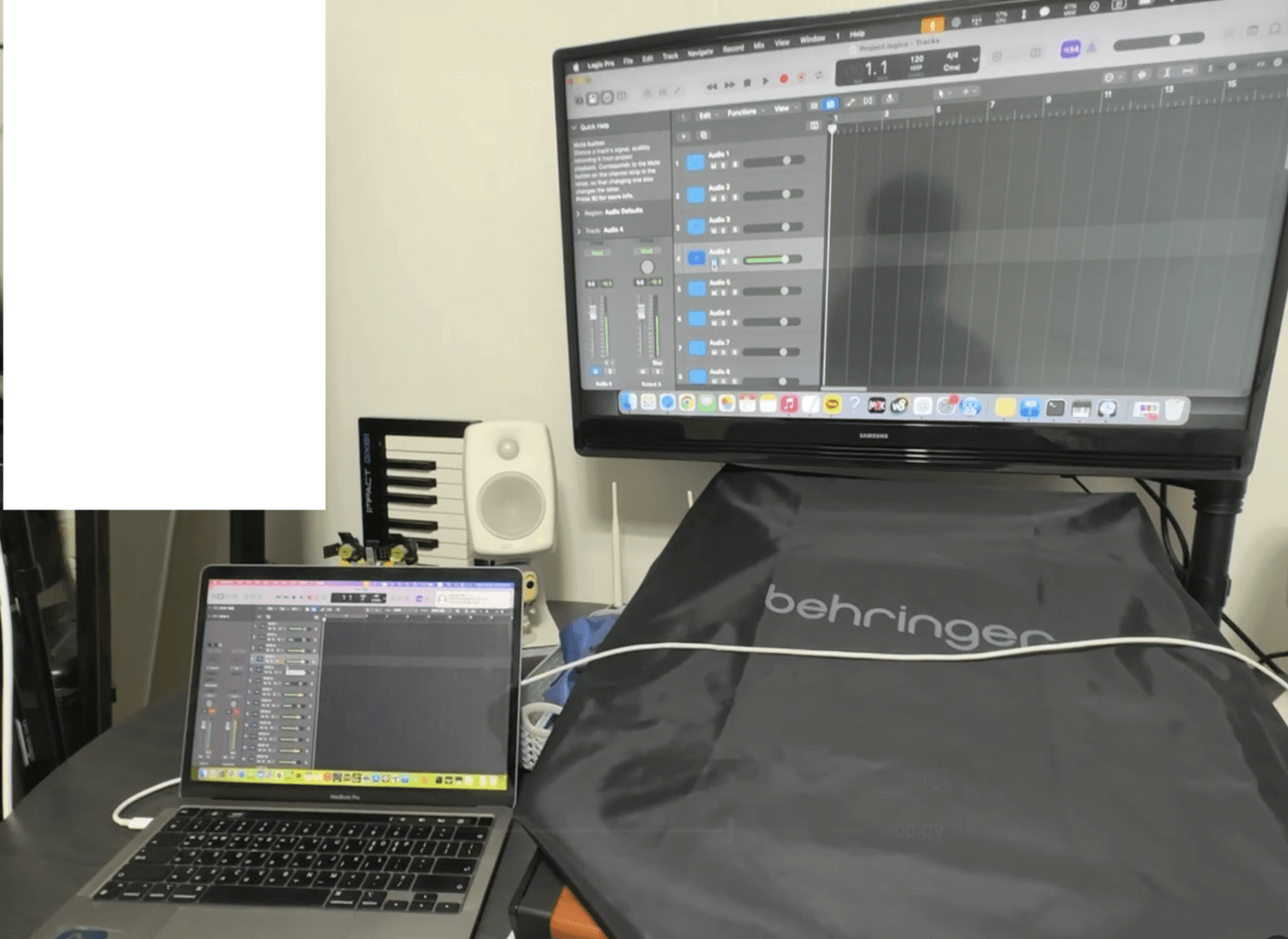
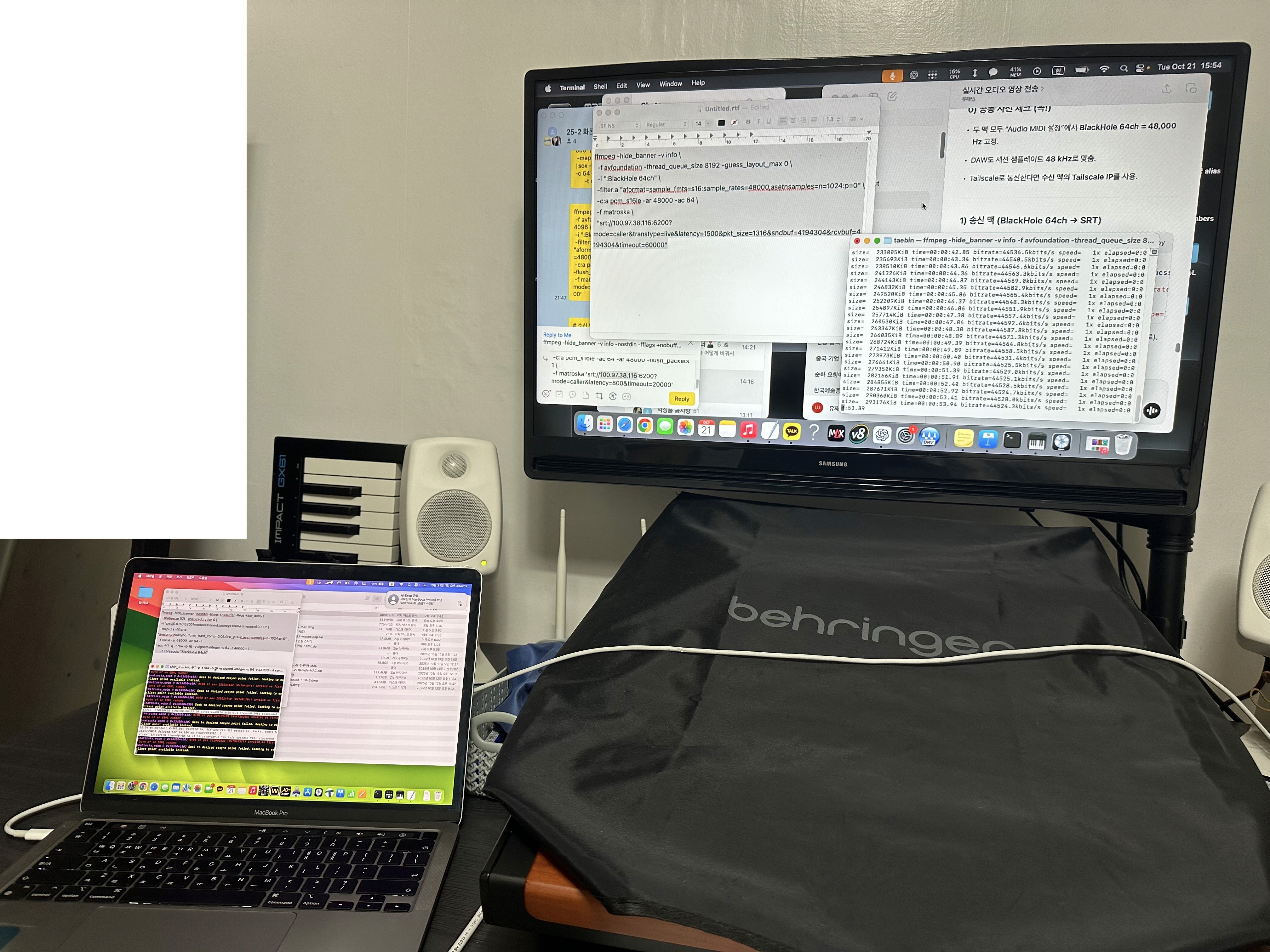
WAN Audio Transmission System
How can musical collaboration continue when physical distance becomes a limitation?
A DAW-to-DAW multichannel WAN testbed using relay and peer-to-peer approaches with ffmpeg, JACK, and JackTrip.
Compare commercial network-audio concepts and open-source transports while monitoring latency, XRUNs, artifacts, and long-term sample accuracy.
Transport was achievable, but the absence of a shared hardware word clock caused accumulating sample drift and audible errors.
Develop an independent synchronization and adaptive resampling layer separate from the audio transport.
This project investigated whether real-time, sample-accurate multi-channel audio transmission between DAWs is feasible over a Wide Area Network (WAN), assuming remote performance, recording, or live mixing scenarios.
Multiple approaches were sequentially tested and evaluated, including commercial network audio protocols (AES67, Dante, AVB), server-based relay systems, peer-to-peer transmission methods, and open-source solutions such as ffmpeg, JACK Audio, and JackTrip. While several methods achieved stable network connectivity and acceptable latency, none could guarantee long-term sample accuracy in a WAN environment.
Through systematic experimentation, the study identified that the core limitation was not network bandwidth or latency, but the absence of a shared hardware word clock between geographically separated DAWs. Without a common master clock, sample drift accumulated over time, resulting in XRUNs and audible digital artifacts such as tick noise.
This research confirmed that real-time multi-channel network audio over WAN is fundamentally constrained by system architecture and clock synchronization, rather than transmission performance alone. The findings suggest that future designs must incorporate an independent synchronization mechanism decoupled from the network transport layer.