CI Interactive Ensemble Room
Can listeners discover their own musical cues—and find them again in a song?
Research progress
Completed work and planned validation, shown separately.
- Completed
Research & design
Literature-based system design and website scope documented; the first browser prototype is implemented.
- Completed
Browser prototype
Sound setup, ensemble controls, cue questions, reports, and local export implemented with pink-noise audio.
- Not started
Recordings & song selection
Select the second song and replace placeholder stems and comparison clips with real recordings.
- Not started
Real-device checks
Check playback, decoding, latency, and screen-reader use on phones, Bluetooth, and CI streaming.
- Not started
Interviews & usability
Participant interviews and usability sessions with 2–5 CI users remain planned; no user findings yet.
My contribution
- Wonder
- Can listeners discover their own musical cues—and find them again in a song?
- Build
- Built a React/TypeScript and Web Audio prototype: six-step sound setup, an interactive ensemble room, two cue-question sets, reflection, listening reports, and browser-local JSON/CSV export.
- Find out
- The interface and audio controls are implemented; the repository records browser and audio-node checks. Pink-noise placeholders support testing the flow, but do not establish musical pitch perception or benefits for CI users. No participant findings yet.
Process & photos
What should listeners be able to choose for themselves? Building sound systems for venues and a drum response for one performer led to a Korean-language interactive listening prototype for cochlear implant (CI) users: CI Interactive Ensemble Room. The project has moved from design documents to a clickable browser prototype.
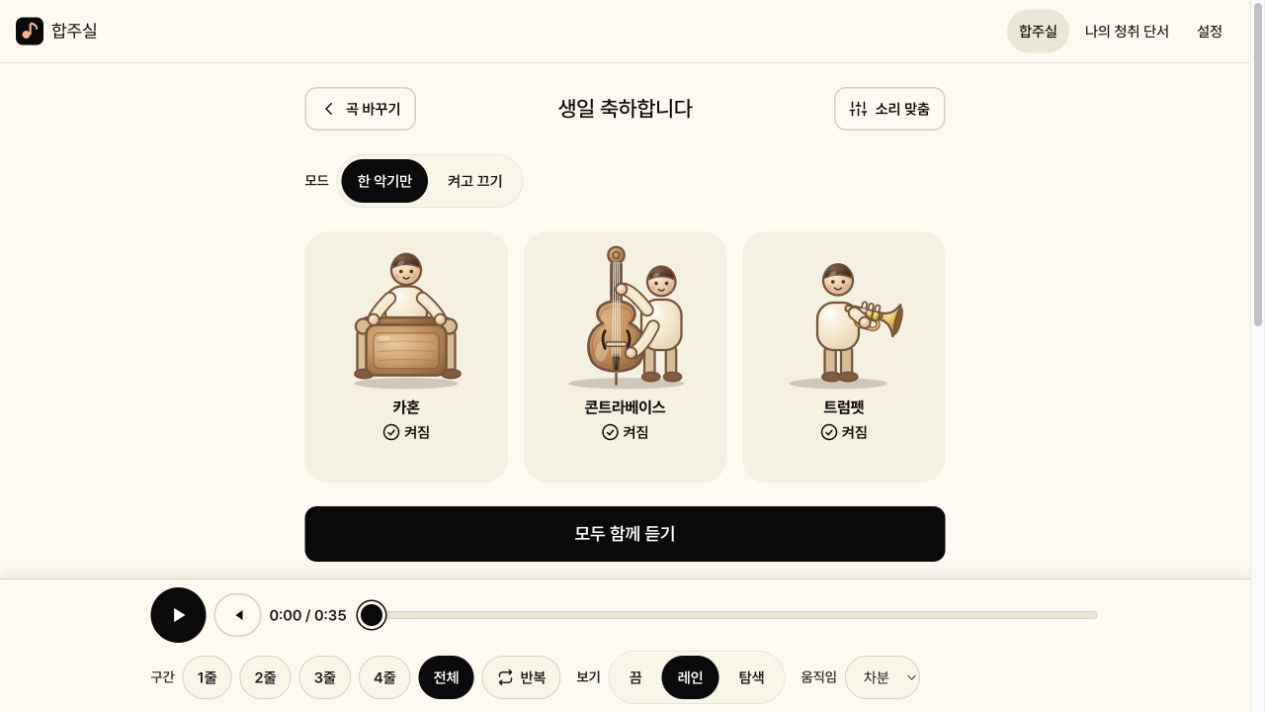
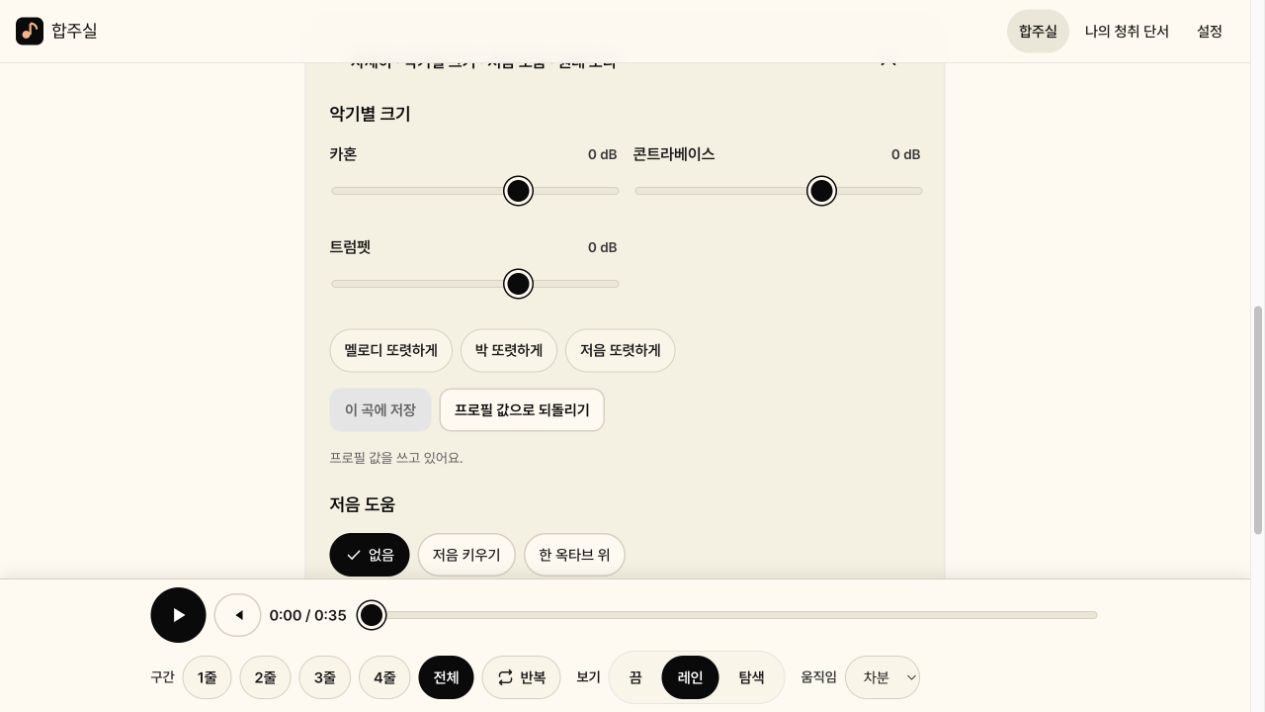
The implemented flow runs from sound activation through six sound-setup steps, an ensemble room, cue questions, reflection, and a personal listening report. Setup covers listening equipment and connection, comfortable volume, left–right balance, tone, instrument levels, and optional bass support. Listeners can revisit these choices from the ensemble room.
In the ensemble room, listeners can solo or mute cajon, double bass, and trumpet, change their levels, loop a section, or alternate between sounds. Optional lanes, waveforms, spectra, and performer animations follow audio timing. A listen-first sequence moves from sound alone to visual guidance and back to listening.
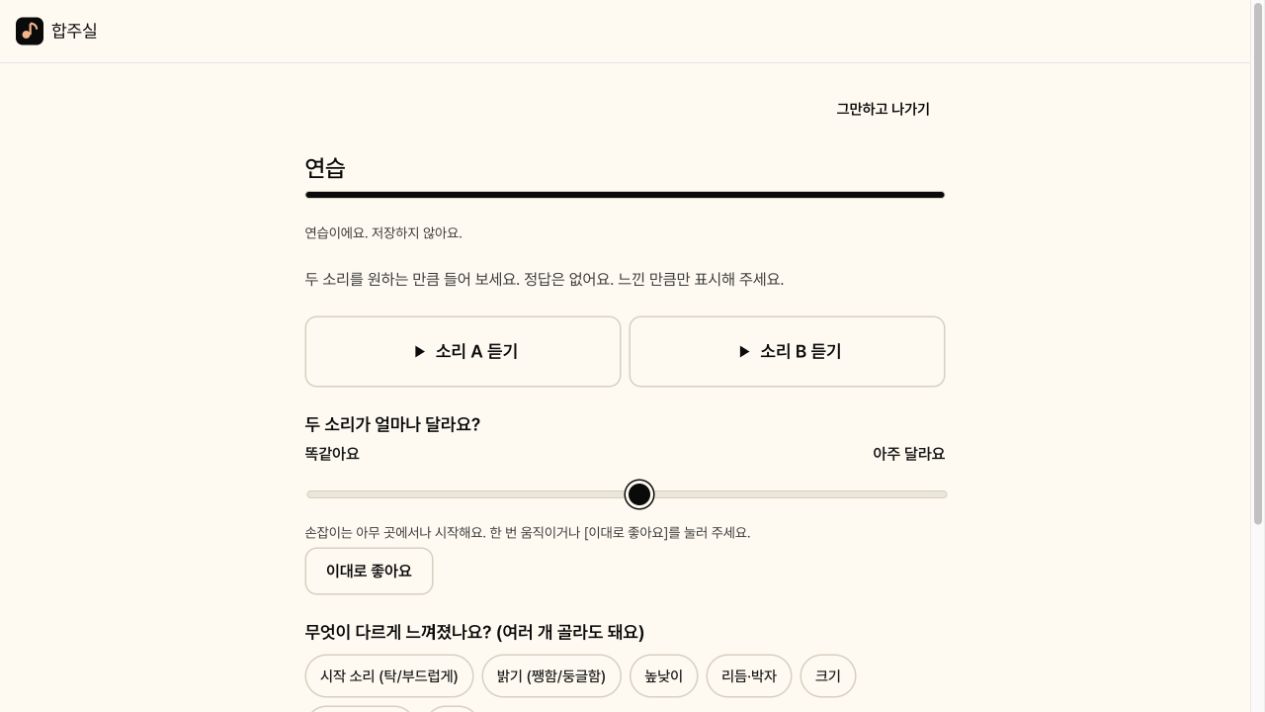
Two cue-question sets use comparisons and reflections without correct answers or scores. The report describes patterns in the current session and lets listeners revise their own explanations. Settings, interaction logs, and responses are stored in the browser; JSON and CSV export and full data deletion are implemented. The prototype uses React, TypeScript, Web Audio, and Canvas 2D.
The audio is still a placeholder: each instrument uses independent pink noise, with no real recordings or pitched melody. The first song structure follows Happy Birthday to You; the second song is undecided. The pitch comparison substitutes a change of noise frequency band, so it cannot yet test musical pitch perception. The interface and audio controls are implemented, but music-listening benefits remain untested.
The repository records browser checks on 23 October 2026 for the main flow, audio-node levels, mobile and desktop layouts, and automated accessibility checks. These are implementation checks, not results from CI participants. Next steps are selecting the second song, recording stems and comparison clips, checking real-device playback and latency including Bluetooth and CI streaming, and conducting initial usability sessions with 2–5 CI users. Longer-term learning and transfer to unfamiliar music require a separate study.