Corrective IR Spatial Reconstruction
How closely can electroacoustic correction bring a live venue toward another hall’s early response and reverberant character?
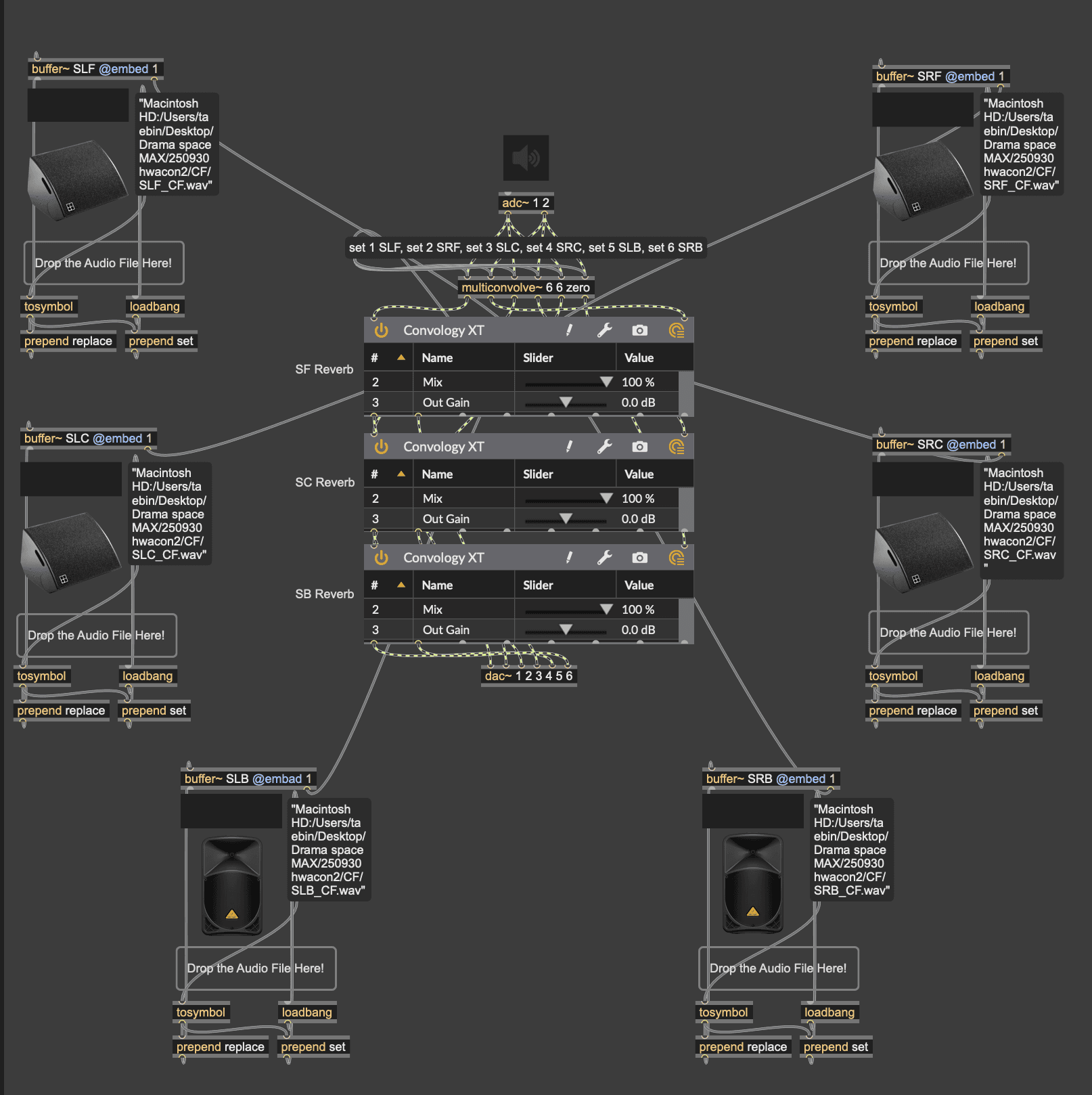
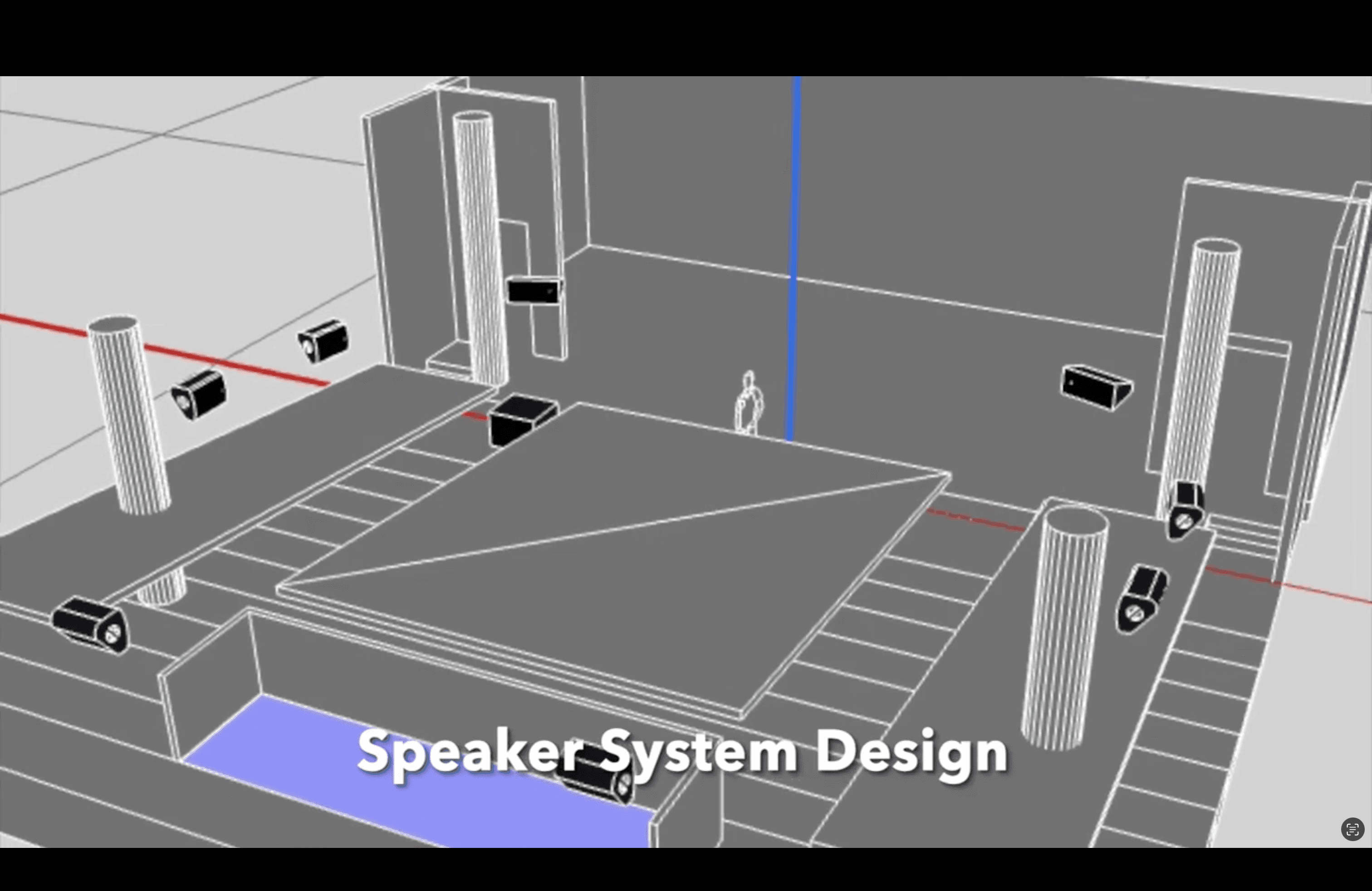
A six-channel hybrid system: dedicated corrective FIRs shape each surround path in Max/MSP, while Convology XT adds the target hall’s late reverberation as a separate layer.
Measure each loudspeaker-to-microphone path, align it with the target IR using GCC-PHAT, and derive a regularized inverse FIR for the 125 Hz–4 kHz, 0–40 ms analysis window. Add the target-hall tail from approximately 200 ms onward.
At the fourth-row center measurement position, the mean spectral error across six channels decreased from 2.69 dB to 2.24 dB within the evaluated frequency band and time window.
Test whether the improvement extends beyond the filter-design position by comparing no correction, direct target-IR convolution, and the proposed method across audience locations, acoustic metrics, and controlled listening evaluations.
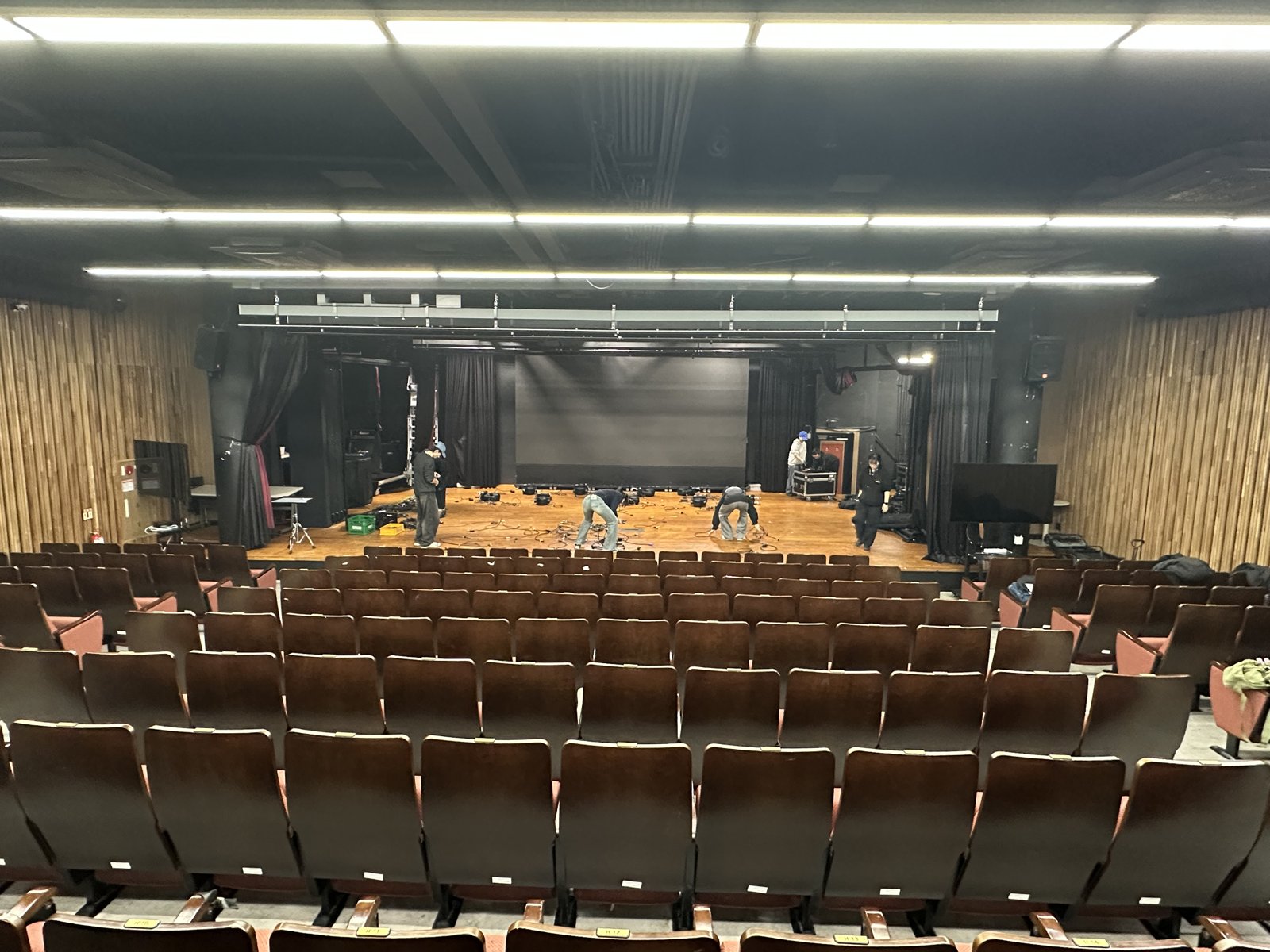
I began with a practical problem: applying a target hall impulse response directly in a live venue does not reproduce that hall consistently, because the processed sound still passes through the current venue and accumulates its acoustic response.
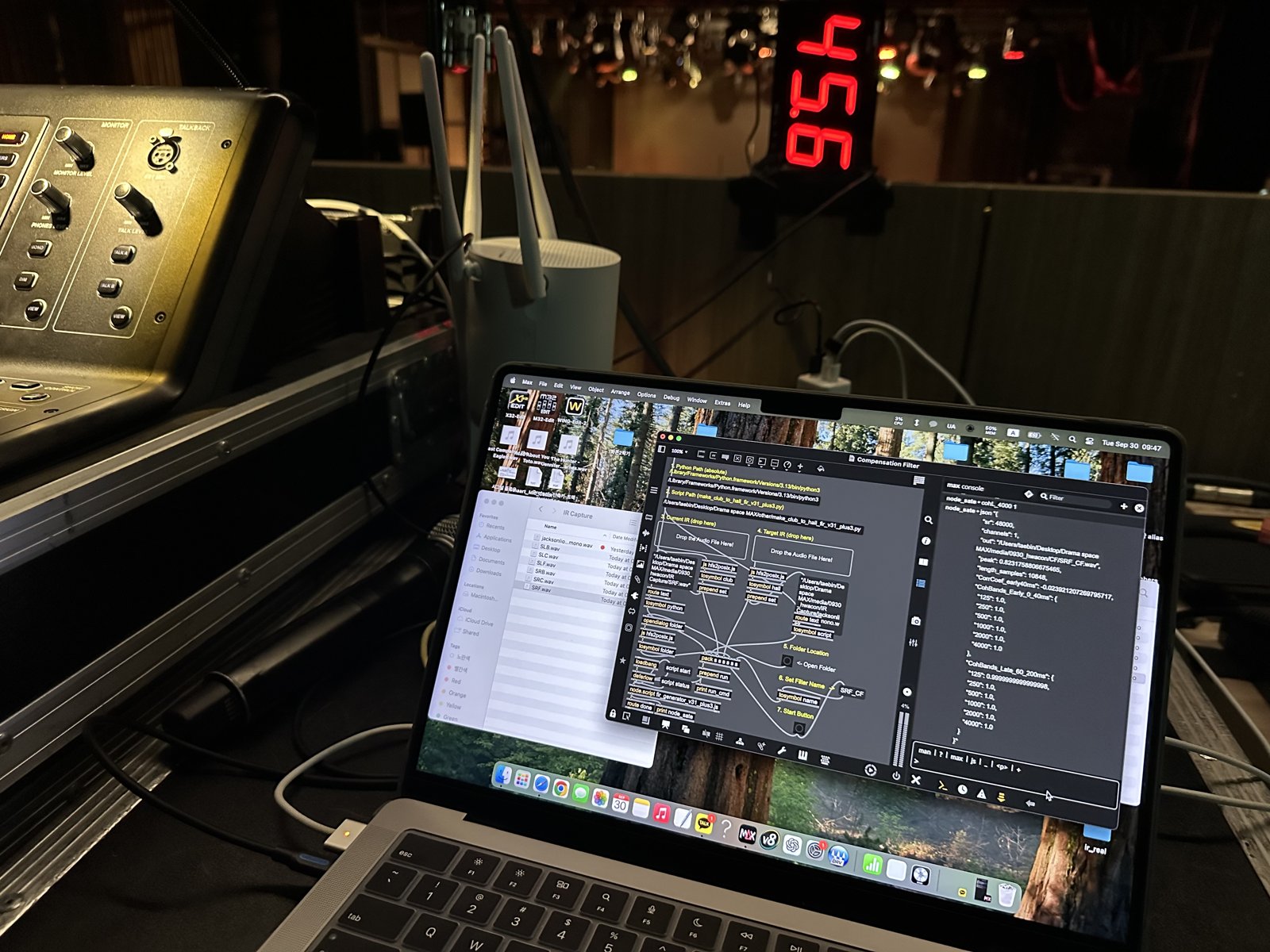
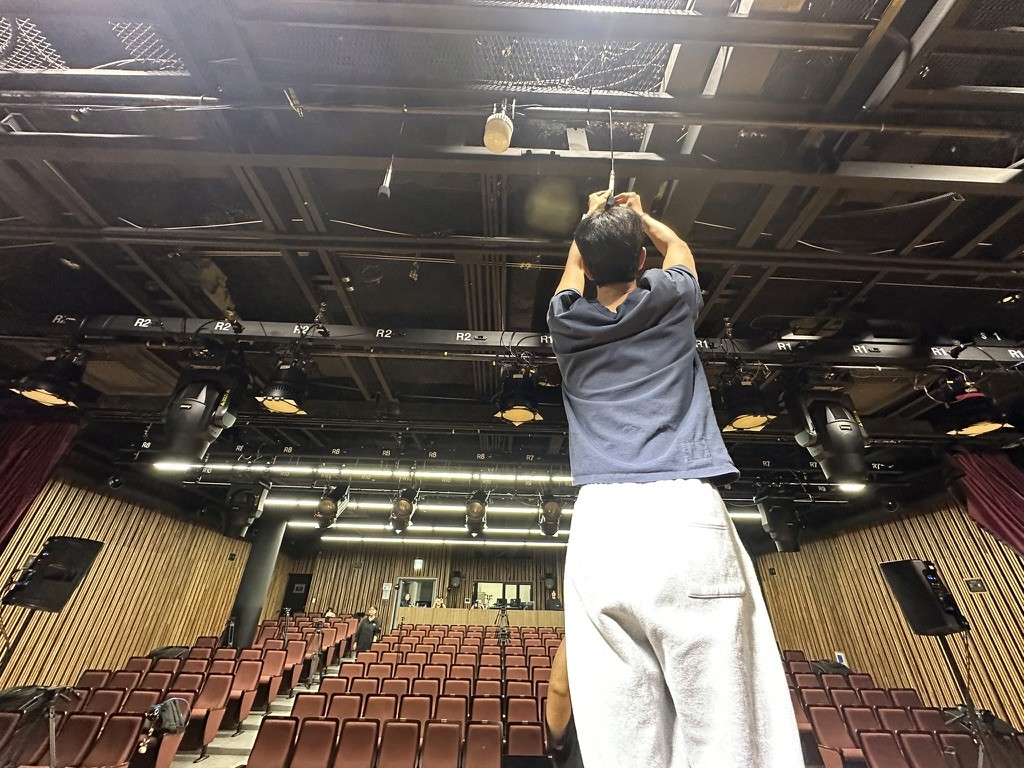
For the live system, I measured six loudspeaker-to-microphone paths using a stage-rigged AB microphone pair. A Python pipeline aligned the current and target IRs with GCC-PHAT, then generated a regularized, band-limited corrective FIR for each surround channel. The correction focused on the 125 Hz–4 kHz band and approximately the first 40 ms of the response.
In Max/MSP, each of the six surround channels was convolved with its own corrective FIR. The target hall’s reverberation tail from approximately 200 ms onward was applied separately through Convology XT, while the main PA retained the direct sound and primary mix balance.
At the measurement position centered on the fourth audience row, the mean spectral error against the target hall across all six channels decreased from 2.69 dB to 2.24 dB in the initial 0–40 ms and 125 Hz–4 kHz analysis range. This is a first-stage comparison using the measurements involved in filter generation; it does not establish an equivalent sound field throughout the audience area or a perceptual match to the target hall. Controlled listening evaluation remains future work.